— Conditions · Sports Injury & Recovery
Acupuncture for Sports Injuries & Recovery
Runners on the W&OD, golfers grinding through league season, lifters who found their limit. Sports injury acupuncture is about getting you back to the thing you love — without pretending needles replace rehab.
Quick answer
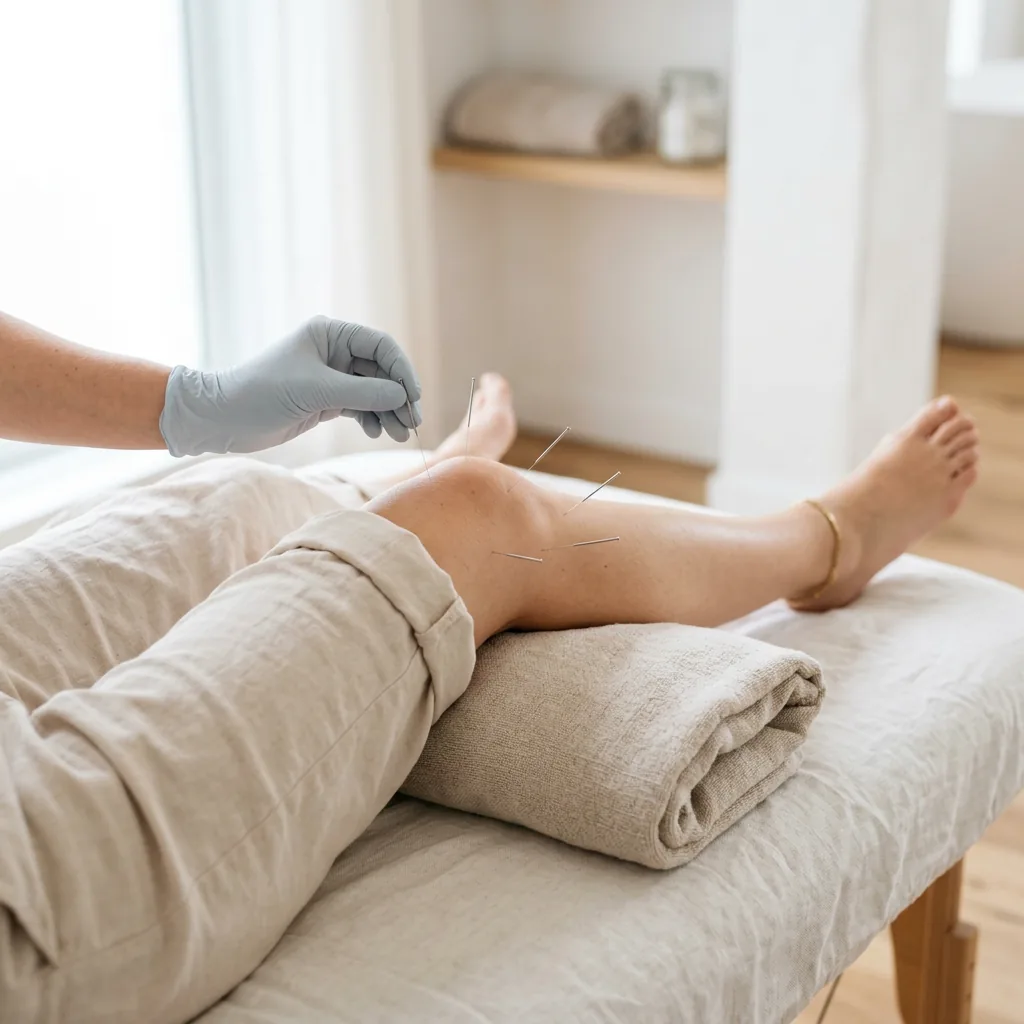
Sports injury acupuncture is a recovery-focused treatment in which thin sterile needles are placed in and around overworked or injured tissue for about 20 to 30 minutes to help ease pain, release muscle knots, and support the body's repair process. At Harmony Acupuncture & Wellness Spa in McLean, VA, an initial session is 60 minutes for $150, follow-ups are 30 minutes for $100, and a 5 session package is $400 — $80 per visit. Open 7 days, 9 AM to 9 PM, on Chain Bridge Rd with free parking. Research suggests acupuncture may help with several overuse pain conditions, though it complements — never replaces — proper rehab and load management.
- Initial visit
- $150 · 60 minutes
- Follow-up
- $100 · 30 minutes
- Package
- 5 sessions · $400
- Hours
- 7 days · 9 AM – 9 PM
— 01
How Acupuncture Supports Recovery from Sports Injuries
Recovery is a blood-flow business. Muscle and tendon repair on the timeline that circulation, load, and rest allow — and the proposed case for acupuncture in an athlete's toolkit rests on nudging those levers. Needling appears to increase local blood flow around treated tissue, may trigger release of the body's own pain-modulating chemicals, and can release the protective muscle guarding that makes an injured area feel locked down. Less guarding means better movement quality in rehab. Better movement quality means the actual healing work — your progressive loading — goes better. That is the mechanism argument, hedged as it should be: research suggests, not guarantees.
There is also the training-schedule argument, which athletes grasp instantly. Most recovery tools cost you something — days off, soreness, appointments that eat an evening. A 30 minute follow-up session with no downtime is cheap by comparison, and being open 7 days from 9 AM to 9 PM means treatment fits around long-run Saturdays and Sunday tee times rather than competing with them.
Who we see, week to week: runners logging miles on the W&OD Trail and the Potomac Heritage Trail, golfers from the country clubs around McLean and Great Falls nursing lead-side backs, tennis players with elbows that flare every league season, and gym athletes whose deadlift progress outran their recovery. All treated by licensed practitioners, all starting with a 60 minute assessment of the actual problem — because "my knee hurts" has a dozen different causes, and the needles go where yours lives.
— 02
Common Sports Injuries (Runner's Knee, Tennis Elbow, Golf & Tennis)
Overuse sports injuries dominate recreational sport, and they share a signature: pain that arrives gradually, flares with activity, and lingers because nobody wants to stop training. The patterns we treat most:
| Injury | Typical pattern | How we approach it |
|---|---|---|
| Runner's knee (patellofemoral pain) | Ache around or behind the kneecap; worse on hills, stairs, and long sits | Needling around the knee plus the quad and hip tension that mistracks the kneecap; supports — not replaces — a strengthening program. |
| IT band syndrome | Sharp outer-knee pain that shows up at a predictable mileage | Release work through the tensor fasciae latae, glutes, and lateral thigh; cupping along the lateral line. |
| Tennis elbow (lateral epicondylitis) | Outer elbow pain gripping a racquet, a coffee mug, a door handle | Local and forearm-extensor needling; honest timelines — tendons remodel slowly, in months not days. |
| Golfer's elbow (medial epicondylitis) | Inner elbow ache that builds through league season | Similar approach on the flexor side, plus the shoulder and thoracic stiffness that often overloads the elbow. |
| Rotator cuff irritation | Shoulder pain on overhead motion, serving, or swimming | Needling of the cuff musculature and upper back; pairs well with tui na for the surrounding tension. |
| Calf and hamstring strains | Sudden pull or chronic tightness that re-tears on speed work | Blood-flow-focused work around the healing tissue once the acute phase passes; patience enforced kindly. |
Acute severe sports injuries are a different category — see the red flags in the return-to-activity section below. And when back pain rather than a limb is what training aggravates, our acupuncture for back pain page covers that ground in depth.
— 03
Muscle Knots & Trigger Points
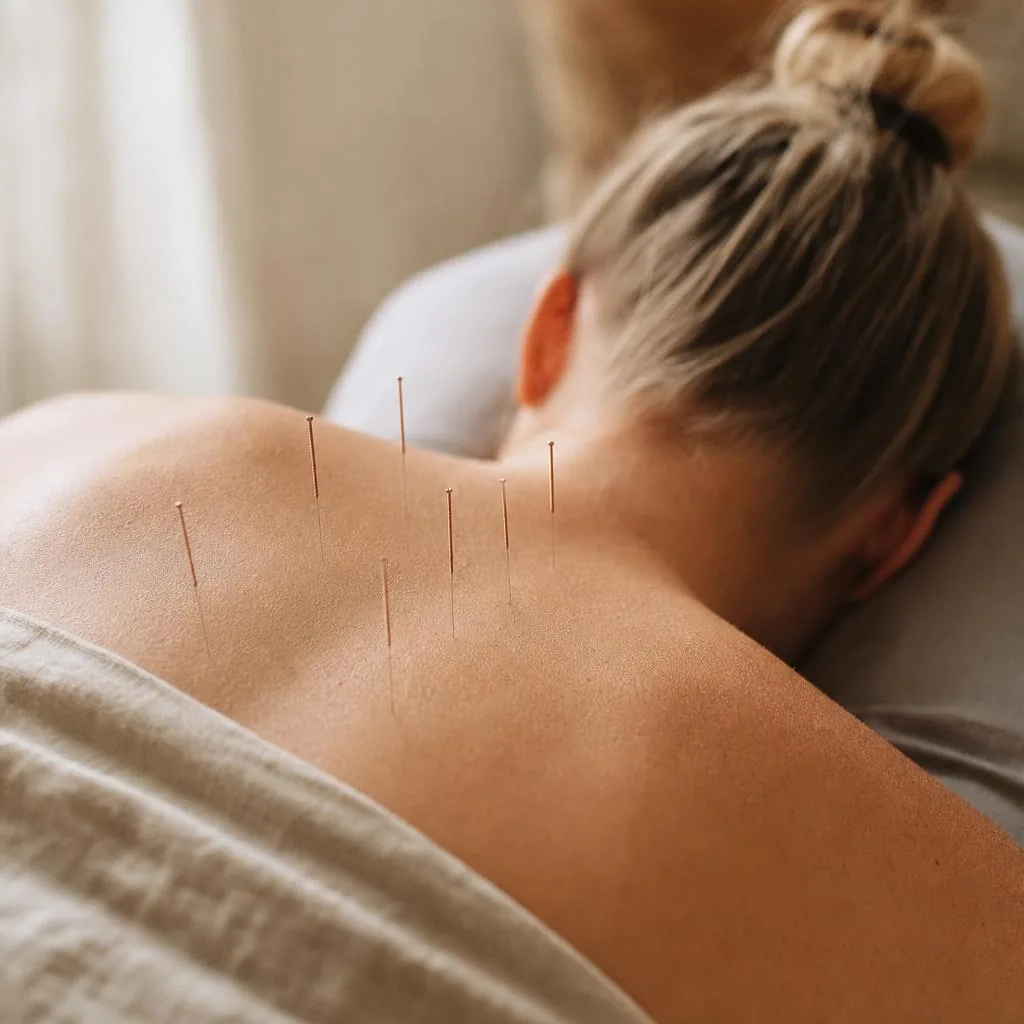
Ask any athlete where their knots live and they will point without hesitating — that spot in the upper trap, the deep glute, the band along the shoulder blade. Acupuncture for muscle knots targets what clinicians call myofascial trigger points: taut, tender bands of muscle fiber that stay partially contracted, ache locally, and often refer pain somewhere else entirely.
A glute trigger point that mimics hamstring tightness. A trap knot that masquerades as a headache. Overworked tissue in athletes breeds them constantly.
Needling is unusually direct for this problem. A fine sterile needle inserted into the taut band can provoke a brief involuntary twitch — the fiber's grip breaking — followed by a slow release that hands-on pressure often cannot reach at depth. Many patients feel the referred pain pattern dissolve within a session or two, though stubborn, long-standing knots typically need several visits and load management to stay gone. Research on trigger point needling is encouraging but mixed, so we frame it as many athletes find it helps, not a certainty.
Is this the same as dry needling?
Close cousins. Dry needling borrows acupuncture's tool and aims it exclusively at trigger points; traditional acupuncture includes that local work and adds channel-based points, a whole-body assessment, and — in Virginia — a substantially longer licensing pathway. Our full dry needling vs acupuncture comparison walks through the training differences and which suits what. Short version: if you want trigger point release, a licensed acupuncturist can do exactly that, with more tools left in reserve. Knots that cluster in your neck and shoulders after desk days deserve their own page — see acupuncture for neck and shoulder pain.
— 04
What Research Shows — and its limits
The strongest evidence sits with the chronic pain conditions athletes actually accumulate. NCCIH's review of complementary approaches reports that acupuncture may help chronic low back pain, neck pain, and osteoarthritis-related knee pain — three patterns that map directly onto aging athletes' complaints. Research on cupping, per NCCIH, is more limited: some studies suggest possible benefit for muscle soreness and pain, but study quality keeps conclusions modest. Massage research, summarized in AMTA's position statement, supports a role in wellness and recovery. Taken together: a reasonable, low-risk toolkit with genuine but unspectacular evidence behind it.
What it can't do — and in sports medicine the limits matter more than anywhere. Needles do not mend a torn ligament, reattach a ruptured tendon, or shortcut the biology of tissue repair; a grade-two hamstring strain heals on collagen's schedule, not ours. No credible practitioner promises "50 percent faster healing," and we will not either. Acupuncture also cannot substitute for the boring cures — progressive loading, sleep, and the deload week you keep postponing. If a sports medicine physician or physical therapist is managing your injury, we slot in beside them, gladly; we do not replace them.
Where the honest value lives: pain eased enough to move well, muscle tension released so rehab exercises reach the right tissue, and a recovery routine you will actually keep because it feels good. Many of our athletes find that combination keeps small problems from graduating into big ones. That is the claim. Nothing grander.
— 05
Cupping for Athletes
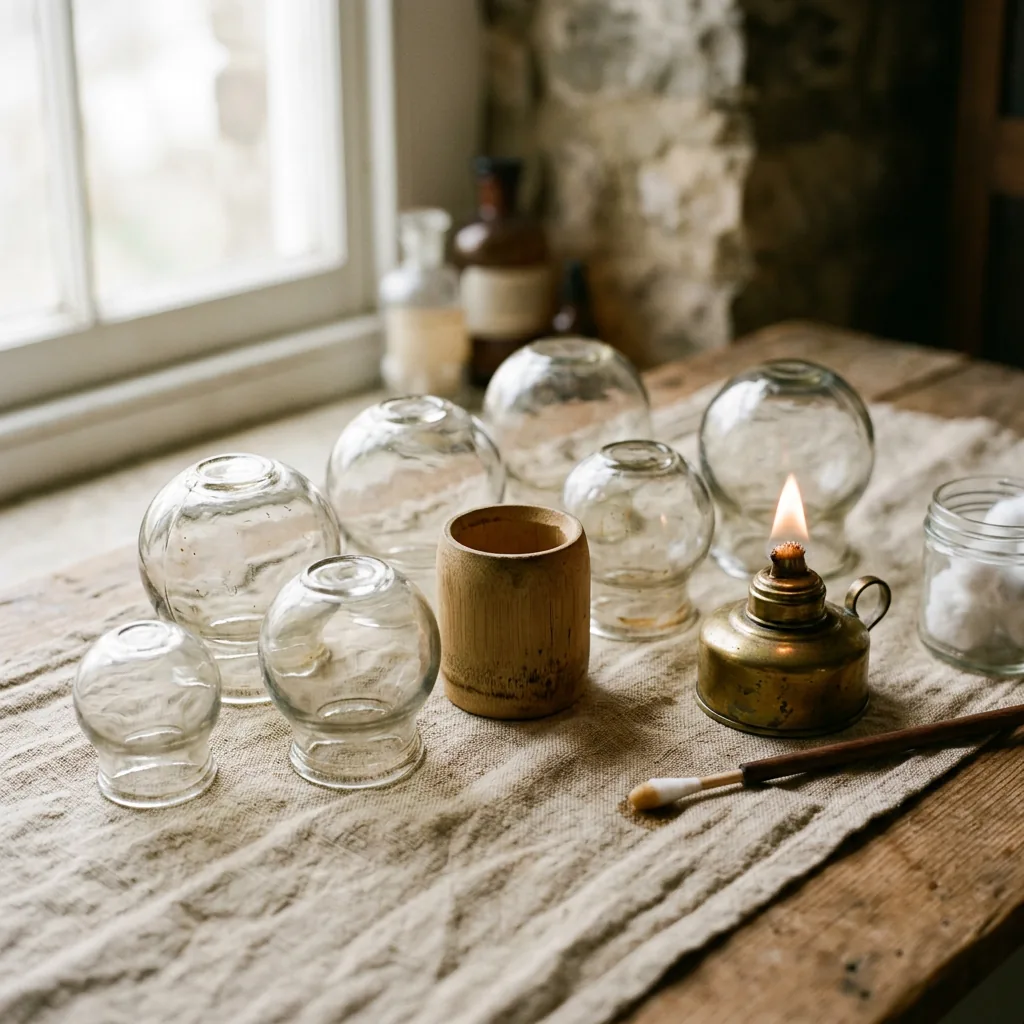
You have seen the circles — on Olympic swimmers' shoulders, on half the lifters at any serious gym. Cupping therapy earned its place in athletic recovery by doing one simple thing well: gentle suction lifts the tissue layers and pulls fresh blood through muscle that heavy training has left dense and congested. Athletes typically use it across the upper back, along the spine, over the glutes and hamstrings, and down the calves — broad regions where training tightness accumulates faster than any single trigger point.
What it feels like: a firm pulling sensation, strange for the first minute, then oddly relaxing. Cups stay on for 5 to 15 minutes. The marks are painless, fade over several days to two weeks, and are not bruises in the injury sense — though if you have a shirtless event on the calendar, mention it and we will place accordingly. Evidence, as noted above, is limited but suggestive for soreness and pain; many athletes simply find they move better the next day, and at $20 as an add-on to any massage — free for members — it is an inexpensive experiment.
A popular recovery stack here: a 60 minute tui na massage for global muscle work, cupping across the heaviest-trained regions, and needling reserved for the two or three stubborn knots that survive both. Members pay $80 for the massage with add-ons free, which makes a consistent recovery habit cheaper than most people's supplement shelf.
— 06
Return-to-Activity Plans After Sports Injuries
Every athlete asks the same question first: when can I get back to it? The honest answer is staged — sports injuries heal in phases — and we plan it with you rather than around you:
| Phase | Focus | What to expect |
|---|---|---|
| Calm it down (visits 1–2) | Assessment; easing pain and guarding around the injured area | 60 minutes first visit. Training continues where it does not provoke the injury — total rest is rarely the plan. |
| Restore movement (visits 3–5) | Releasing compensations; supporting rehab loading | 30 minute follow-ups timed to your training week — many athletes book the day after hard sessions. |
| Rebuild capacity | Spacing sessions as training volume climbs back | You test the sport in graded doses; we handle the tightness that surfaces as volume returns. |
| Stay ahead of it | Optional maintenance during peak season | A session every few weeks through marathon buildup or league season — catching hot spots while they are still cheap to fix. |
Red flags — see a physician now
- A pop or snap at injury followed by rapid swelling, or a joint that gives way or locks
- Inability to bear weight, or obvious deformity after impact
- Numbness, tingling, or progressive weakness below the injury
- A calf that is swollen, hot, and tender at rest — possible blood clot, urgent
- Any suspected fracture, full tendon rupture, or head injury
Get those evaluated first; acupuncture joins after diagnosis, not instead of it. For everything else — book online, or start with our McLean clinic page if you are mapping the drive from a weekend ride out the GW Parkway.
— Pricing
| Acupuncture | Price |
|---|---|
| Initial session · 60 minutes | $150 |
| Follow-up session · 30 minutes | $100 |
| Package · 5 sessions (30 minutes each)($80 per visit) | $400 |
Insurance patients: sessions are billed through your plan — text us your policy info for a free benefits check.
Parking & arrival
Free parking — easy in, easy out on Chain Bridge Rd
Open every day 9 AM – 9 PM — lunch-break, after-work, and weekend visits all fit.
- Park free directly on-site at 1481 Chain Bridge Rd, Ste 300 — no garages, no meters.
- Look for the red-brick building; we're in Ste 300 with signage at the entrance.
- Arrive 10 minutes early for your first visit to settle in — WiFi and a snack bar are waiting.
— Questions
Asked & answered.
Can I train on the same day as an acupuncture session?
How many sessions does it take to release a muscle knot?
What is the difference between dry needling and acupuncture for athletes?
Do you treat runner's knee and IT band pain?
Is acupuncture safe with an acute injury or after surgery?
— Research & references
NCCIH — Chronic Pain and Complementary Health Approaches
Summarizes evidence that acupuncture may help chronic low back, neck, and osteoarthritis-related knee pain — common territory for recreational athletes.
NCCIH — Cupping
Notes that some studies suggest possible benefit for pain and muscle soreness, while overall evidence remains limited.
AMTA — Massage Can Improve Health and Wellness
Research-based position statement supporting massage therapy's role in wellness, including recovery-oriented bodywork.
Citations are summarized — please consult the original sources. This page is general health education, not medical advice for your specific case; results vary and acupuncture works best alongside, not instead of, care from your physician.
— Keep exploring
Service
Cupping Therapy
The athlete's favorite — broad suction release across trained muscle.
Service
Tui Na Medical Massage
Global recovery bodywork; $80 per 60 minutes at the member rate.
Condition
Acupuncture for Back Pain
When training aggravates your back — deadlifts, golf swings, long rides.
Location
Acupuncture in McLean, VA
Our Chain Bridge Rd clinic — free parking, open 7 days to 9 PM.