— Seasonal Relief · McLean, VA
Acupuncture for Seasonal Allergies & Sinus Relief
Every April, Northern Virginia's oak pollen turns parked cars yellow-green — and sends half the region reaching for tissues. Acupuncture for seasonal allergies offers a drug-free way to take the edge off, before and during your worst season.
Quick answer
Acupuncture for seasonal allergies is a Traditional Chinese Medicine treatment that places fine sterile needles at points around the nose, face, hands, and legs to help ease congestion, sneezing, and sinus pressure. At Harmony Acupuncture & Wellness Spa in McLean, an initial session is 60 minutes for $150, follow-ups are 30 minutes for $100, and a 5 session package is $400. We are open 7 days, 9 AM to 9 PM. Clinical trials suggest acupuncture may modestly reduce seasonal allergy symptoms for some people; it works alongside — not instead of — your allergist's plan.

- Initial visit
- $150 · 60 minutes
- Follow-up
- $100 · 30 minutes
- Best timing
- Start 4–6 weeks pre-season
- Hours
- 7 days · 9 AM – 9 PM
— 01
The TCM View of Allergies
Why do two people walk the same pollen-dusted trail along the Potomac and only one comes home sneezing? Allergy science answers with IgE antibodies and histamine. Traditional Chinese Medicine answers with a concept called wei qi — defensive qi, the body's protective layer at the surface.
In the TCM framework, hay fever is what happens when wei qi is weak or disordered: wind and pollen invade the exterior, the lung system — which governs the nose in Chinese medicine — loses its ability to regulate, and you get the familiar cascade of sneezing, streaming eyes, and blocked sinuses. Chronic allergies are read as a deeper pattern, often involving what TCM calls spleen and kidney energy, which is why treatment usually looks beyond the nose itself.
These are traditional explanatory models, not laboratory findings — we hold them lightly. But they generate a practical strategy that modern allergy care mostly lacks: instead of only blocking symptoms during the storm, TCM works to strengthen the terrain in the calm weeks before it. That is why the classic advice is to begin acupuncture for allergies about a month before your season starts, and why the same defensive-qi logic connects this page to our acupuncture for immune support work.
Fair warning from people who live here too: in Northern Virginia the calm weeks are short. Between tree pollen, grass, ragweed, and indoor winter allergens, McLean's allergy calendar barely closes. Timing, as the table below shows, is most of the game.
— 02
How Acupuncture Eases Seasonal Allergies
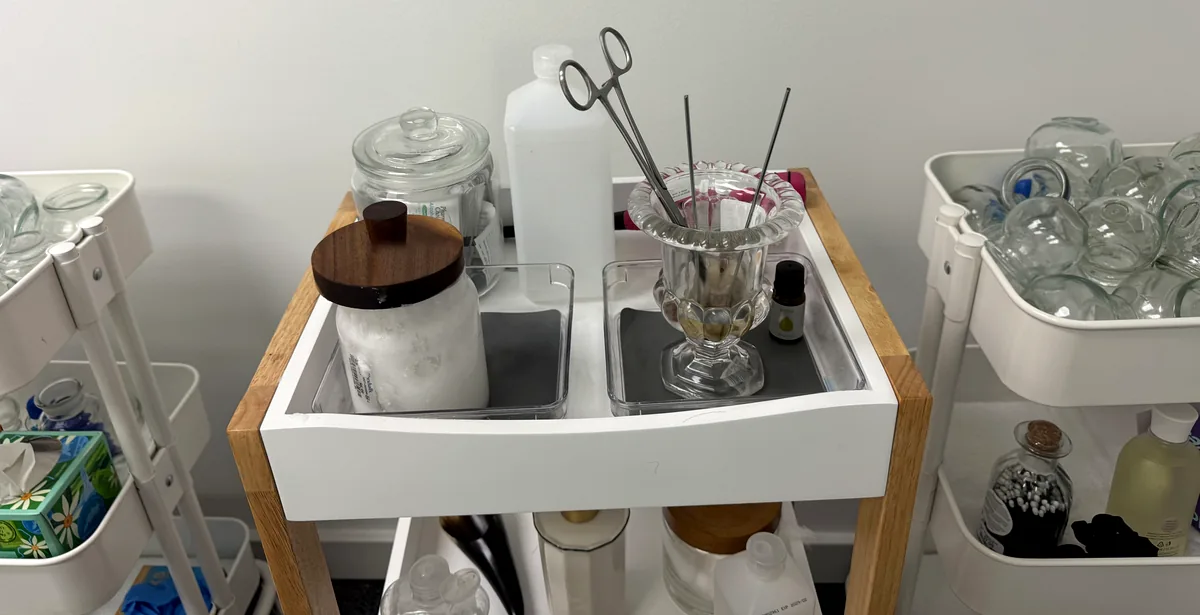
A typical allergy session uses points you would mostly predict — and a few you would not. Fine needles beside the nostrils (a point pair traditionally called Welcome Fragrance, for obvious reasons), at the midpoint between the eyebrows for sinus pressure, on the hands and forearms, and down at the legs to address the underlying pattern. Needles are sterile and single-use, placed by licensed practitioners, and most patients simply rest for 20 to 30 minutes once they are in.
What might be happening underneath? Researchers propose that needling may modulate the nervous system's control of nasal blood flow and secretion, and may influence inflammatory signaling — including, in some laboratory studies, markers tied to the histamine response. None of this is settled science. What the clinical trials measure is simpler: symptom scores and medication use. Several large randomized trials in seasonal allergic rhinitis found that patients receiving acupuncture reported modestly better symptom control and needed less rescue antihistamine than comparison groups, though effects varied and sham-acupuncture comparisons complicate interpretation.
Translation without spin: research suggests acupuncture may take the edge off seasonal allergies for some people — fewer miserable mornings, less reliance on that second antihistamine — rather than switching allergies off. Many patients find that entirely worth it, especially those who dislike how antihistamines make them feel at work.
Immediate relief is real but temporary at first: many people notice their sinuses open on the table. The more durable change, when it comes, builds across a series timed to your season.
— 03
Timing Seasonal Allergies to NoVA Pollen
Northern Virginia is a genuinely hard place to have allergies. Dense tree canopy, long growing seasons, and humidity that keeps mold happy. Here is the local calendar we plan treatment around:
| Season | Peak months | Main triggers in Northern Virginia | When to start care |
|---|---|---|---|
| Tree pollen | March – May | Oak, maple, birch, and cedar — the yellow-green film on every windshield along the GW Parkway each April | Begin sessions in February, about 4 to 6 weeks before your symptoms usually arrive |
| Grass pollen | May – June | Fescue and other lawn grasses across McLean and Fairfax County | Start in April if late spring is your worst stretch |
| Ragweed & weeds | August – October | Ragweed along trails, roadsides, and the W&OD corridor | Begin in July, before the first cool-morning flare |
| Indoor / winter | November – February | Dust mites, mold, and pet dander concentrated by closed windows and forced-air heat | Anytime — pair sessions with the home measures below |
The pre-season start matters for two reasons. Traditionally, the quiet weeks are when wei qi can be strengthened rather than merely defended. Practically, it means your treatment series reaches full stride exactly when the oak trees do — instead of starting from behind in mid-April.
During peak season, most patients do best with weekly 30 minute follow-ups; the 5 session package covers a typical season at about $80 per visit. Coming from Vienna or Oakton? We are an easy hop up Route 123 — details on our acupuncture serving Vienna page.
— 04
Daily Habits & Lifestyle
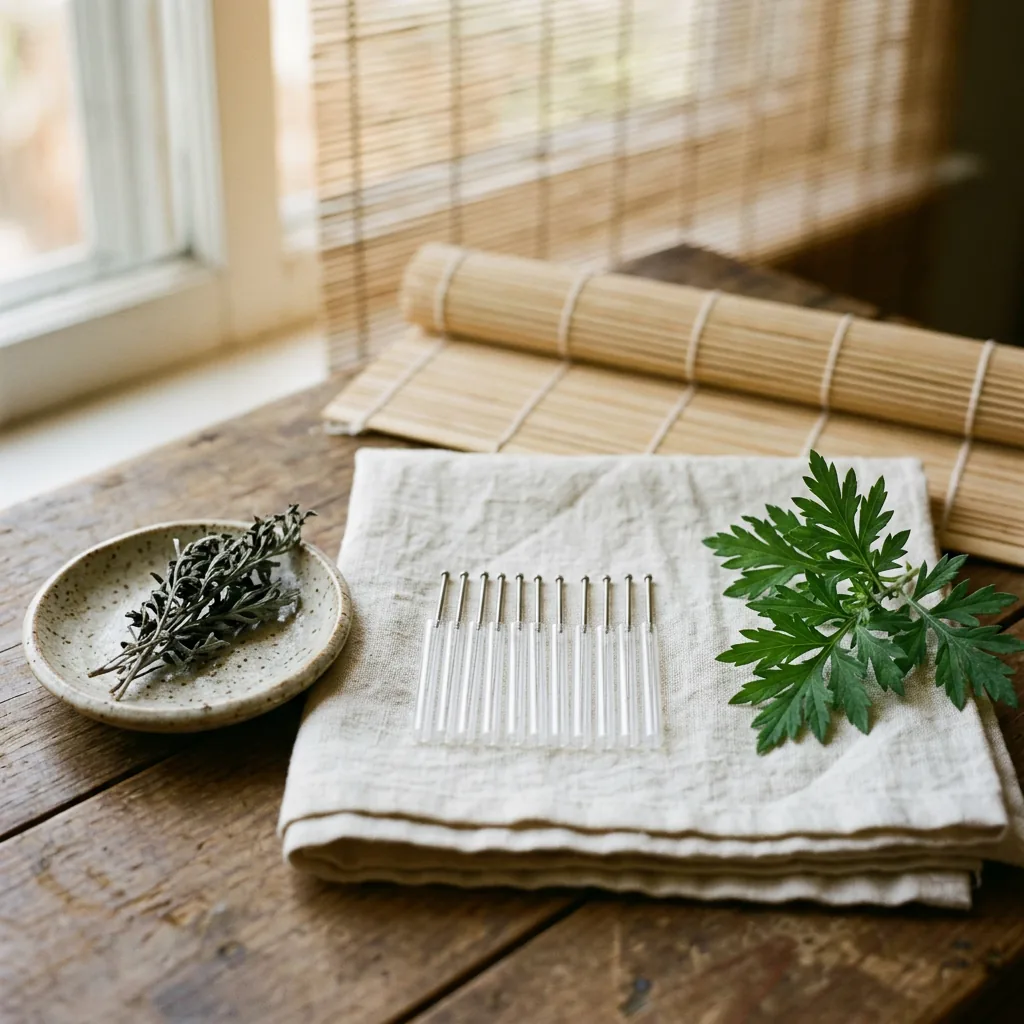
Chinese medicine rarely fights allergies with needles alone. Diet and lifestyle guidance from a TCM perspective — favoring warm, cooked meals during flare weeks, easing off the iced drinks the tradition links to dampness, and guarding sleep through peak season — is traditionally used to support the same terrain the needles address. Ours is personalized after an intake, matched to your pattern rather than a printout — call or text 240-715-5939. Pairing sessions with tui na meridian massage can also ease the neck and sinus-area tension that congestion builds, and always tell us about antihistamines, inhalers, or other prescriptions so everything stays coordinated.
Alongside treatment, the everyday mechanics do more than people expect:
- Check the pollen count before morning workouts; counts run highest between roughly 5 AM and 10 AM on dry, windy days.
- Shower and change clothes after time outside — pollen rides home on hair and collars.
- Rinse with saline (distilled or previously boiled water only) to clear the nasal passages mechanically.
- Run a HEPA filter in the bedroom and keep windows closed on high-count days, tempting as an April breeze is.
- Wash bedding weekly in hot water — it is the cheapest dust-mite intervention there is.
- Wipe down pets that have been outdoors; they are efficient pollen shuttles.
Gua sha along the neck and shoulders, or gentle cupping over the upper back, are traditional add-ons for lingering congestion — see our gua sha & hot stone page for how they fit in.
— 05
Working With Your Allergy Routine
Acupuncture is an addition to allergy care, not a replacement for it. Keep taking what works: antihistamines, nasal steroid sprays, and especially allergy immunotherapy if your allergist has you on shots or drops — immunotherapy is the only approach shown to change the underlying allergic response long-term. Acupuncture has no drug interactions, so there is nothing to sequence or separate; many patients simply notice, over a season, that they reach for the rescue medication less often. That is the realistic win.
Where we fit best:
- You get drowsy or foggy on antihistamines and want to lean on them less during the workday.
- Sprays and pills control the sneezing but the sinus pressure and post-nasal drip linger.
- You are between immunotherapy and nothing — not ready for years of shots, but tired of white-knuckling April.
- Allergy season wrecks your sleep, and the congestion-fatigue loop needs breaking from both ends.
We accept major insurances like UnitedHealthcare and Aetna; acupuncture coverage varies by plan, so text your policy info to 240-715-5939 for a free benefits check or start with our insurance guide. And if your bigger question is resilience across the whole year rather than one pollen season, that is exactly what our immune support work addresses.
— 06
What Research Shows — and Its Limits
The evidence for acupuncture in seasonal allergic rhinitis is among the better bodies of research in complementary medicine — multiple randomized trials, some quite large — and it still comes with honest caveats. Reported benefits are modest, not dramatic; some trials show little separation from sham needling; and NCCIH's overview of Traditional Chinese Medicine urges exactly the posture we take here: potentially useful for some conditions, never a substitute for conventional care.
What acupuncture can't do
- It cannot cure allergies or change your underlying IgE sensitization — only immunotherapy has evidence for that.
- It cannot treat anaphylaxis or replace epinephrine. If you carry an EpiPen, keep carrying it.
- It is not asthma treatment. Never reduce inhaled or oral asthma medication without your physician.
Get medical care now if
- Hives spread rapidly, or your lips, tongue, or throat begin to swell — use epinephrine if prescribed and call 911.
- Wheezing or shortness of breath appears or worsens — same-day medical attention, not a wellness visit.
- Facial pain and fever persist, or congestion lasts beyond 10 days and worsens — that pattern suggests a sinus infection worth a doctor's look.
Within those limits, a pre-season series is a low-risk, medication-sparing experiment with a clear scorecard: how many bad mornings did April actually cost you this year?
— Pricing
| Acupuncture | Price |
|---|---|
| Initial session · 60 minutes | $150 |
| Follow-up session · 30 minutes | $100 |
| Package · 5 sessions (30 minutes each)($80 per visit) | $400 |
Insurance patients: sessions are billed through your plan — text us your policy info for a free benefits check.
Parking & arrival
Free parking — easy in, easy out on Chain Bridge Rd
Open every day 9 AM – 9 PM — lunch-break, after-work, and weekend visits all fit.
- Park free directly on-site at 1481 Chain Bridge Rd, Ste 300 — no garages, no meters.
- Look for the red-brick building; we're in Ste 300 with signage at the entrance.
- Arrive 10 minutes early for your first visit to settle in — WiFi and a snack bar are waiting.
— Questions
Asked & answered.
When should I start acupuncture before allergy season?
How many sessions does allergy relief take?
Can acupuncture replace my antihistamines?
Does acupuncture help year-round allergies and chronic sinus congestion?
Does insurance cover acupuncture for allergies?
— Research & references
NCCIH — Traditional Chinese Medicine
Overview of TCM practices including acupuncture; evidence varies by condition and TCM should complement, not replace, conventional care.
NCCIH — Mind and Body Practices
Summarizes research on acupuncture and related practices; findings for many conditions are promising but not definitive.
Citations are summarized — please consult the original sources. This page is general health education, not medical advice for your specific case; results vary and acupuncture works best alongside, not instead of, care from your physician.
— Keep exploring
Condition
Acupuncture for Immune Support
The defensive-qi logic behind allergy care, applied year-round.
Service
Gua Sha & Hot Stone
Traditional add-ons for the lingering congestion of allergy season.
Location
Acupuncture Serving Vienna, VA
A quick trip up Route 123 from Vienna and Oakton.
Insurance
Insurance & Coverage
Which plans cover acupuncture in Virginia — and how to verify free.