— Whole-Body Care · McLean, VA
Acupuncture for Immune Support
Every winter the question returns: can acupuncture actually help your immune system? The honest answer is more interesting than the marketing — here is what traditional practice does, what research suggests, and where the limits sit.
Quick answer
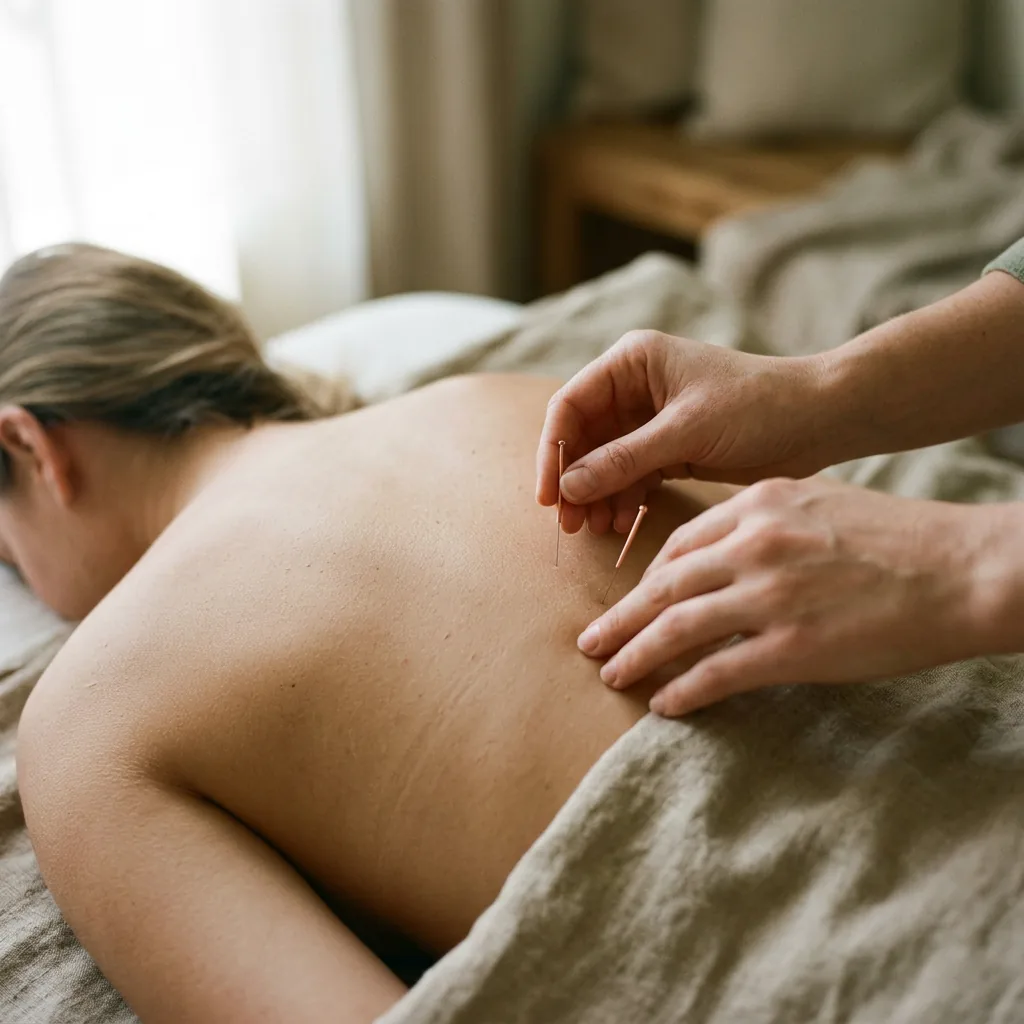
Acupuncture for immune support is a Traditional Chinese Medicine practice that places fine sterile needles at points traditionally associated with the body's defenses — such as LI4, ST36, and CV6 — to support overall resilience. At Harmony Acupuncture & Wellness Spa in McLean, an initial session is 60 minutes for $150, follow-ups are 30 minutes for $100, and a 5 session package is $400. We are open 7 days, 9 AM to 9 PM, on Chain Bridge Rd. Early research suggests acupuncture may influence some immune markers, but it is not a vaccine substitute and does not prevent or treat infections.
- Initial visit
- $150 · 60 minutes
- Follow-up
- $100 · 30 minutes
- Hours
- 7 days · 9 AM – 9 PM
- Address
- 1481 Chain Bridge Rd, Ste 300
— 01
How Acupuncture May Influence Immune Function
Chinese medicine has a two-thousand-year-old vocabulary for immunity. Wei qi — defensive qi — is described as a protective layer circulating at the body's surface, repelling what the classics call external pathogens: wind, cold, damp. A person with robust wei qi shrugs off the office cold; a person with depleted wei qi catches everything and takes weeks to recover. Strengthening that defensive layer, rather than fighting each individual invader, is the traditional goal of acupuncture for immune support.
Modern research approaches the acupuncture and immune system question differently, and more cautiously. Small studies have reported measurable changes after acupuncture in immune parameters — natural killer cell activity, certain cytokines and inflammatory markers — suggesting needling may modulate immune signaling through the nervous system. These are surrogate markers, measured in small groups, and a shifted lab value is not the same as fewer sick days. We read this literature as interesting, early, and unproven.
The sturdier scientific ground is indirect. Chronic stress and poor sleep are both associated with dampened immune responses — this is mainstream physiology, not fringe theory. Acupuncture's best-supported effects are exactly there: helping people manage stress and sleep better. Support the terrain, and the defenses that live on it have a fairer chance.
So when patients ask whether acupuncture can boost immunity, our answer is deliberately modest: it may support the conditions your immune system works best under. That framing also explains our companion pages on acupuncture for insomnia and stress care — same system, different doors.
— 02
What Research Shows (and Its Limits)
Be wary of anyone who tells you acupuncture is proven to strengthen the immune system. The honest inventory looks like this: laboratory and small clinical studies suggest acupuncture may influence immune markers; stress-reduction and sleep pathways offer a plausible indirect route; and no rigorous trial has demonstrated that acupuncture prevents colds, flu, or any infection.
NCCIH's overview of Traditional Chinese Medicine is explicit that evidence varies widely by condition and that TCM belongs alongside conventional care, not in front of it.
That does not make immune-support treatment pointless — it makes the goals realistic. Patients who come in monthly through the winter are, in effect, buying reliable stress and sleep maintenance from licensed practitioners, plus a tradition-guided once-over of the habits that actually move the needle: rest, food, recovery pacing. Reasonable. Useful. Just not a force field.
What acupuncture can't do
- It is not a substitute for vaccination — get the flu shot and other vaccines your physician recommends.
- It does not treat active infections. Antibiotics, antivirals, and your doctor handle those.
- It cannot compensate for an immune deficiency or replace prescribed immunotherapy or immunosuppressant management.
See a doctor now if
- Infections keep returning, or a fever persists beyond a few days.
- You notice swollen lymph nodes that do not resolve, drenching night sweats, or unexplained weight loss — these need a medical workup promptly, not a wellness plan.
- You are immunocompromised and considering any new therapy — loop in your physician or oncologist first. We are glad to coordinate.
— 03
Acupuncture Points Commonly Used for Immune Support
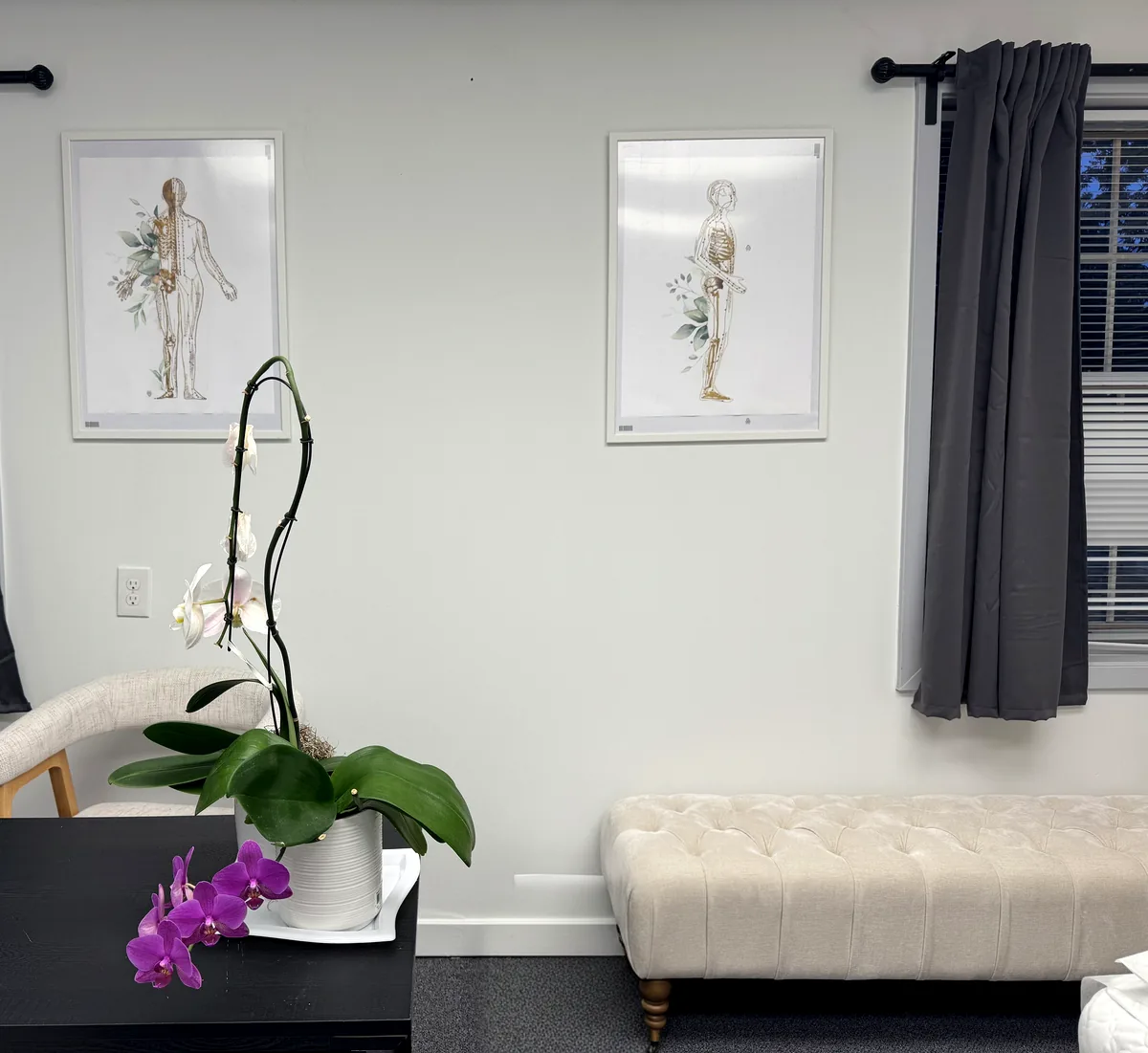
These are the points practitioners select most often when the goal is general immune support. Each description is a classical association — how the point is traditionally used in Chinese medicine — not a proven mechanism:
- LI4 (Hegu) — on the back of the hand between thumb and index finger; traditionally used to release the exterior and mobilize the body's defensive qi.
- ST36 (Zusanli) — below the knee beside the shinbone; the classic fortifying point, traditionally used to strengthen qi, digestion, and overall vitality.
- CV6 (Qihai) — on the midline below the navel; named the Sea of Qi, traditionally used to build foundational energy and resilience.
- LI11 (Quchi) — at the outer end of the elbow crease; traditionally used to clear heat and support the body during seasonal transitions.
- LU7 (Lieque) — above the wrist on the thumb side; a key lung-channel point, traditionally paired with respiratory and defensive-qi concerns.
- SP6 (Sanyinjiao) — above the inner ankle; a meeting point of three channels, traditionally used to nourish blood and support recovery.
- GV14 (Dazhui) — at the base of the neck below the seventh cervical vertebra; traditionally needled, often with gentle warmth over the area, at the first sign of a chill.
No one receives all seven as a fixed recipe. A licensed acupuncturist combines a few of these with points specific to your presentation — your sleep, stress load, digestion, and season — which is why the intake conversation matters as much as the needling. Several of these points, ST36 and GV14 especially, also pair naturally with gentle warmth — the comfort-focused approach described further down this page.
— 04
Seasonal Wellness in Northern Virginia
Immune support is seasonal work, and Northern Virginia runs a demanding calendar. Spring brings the pollen onslaught — if allergies are your yearly tax, our acupuncture for allergies page covers the same defensive-qi logic pointed at that specific problem, including when to start pre-season care. Summer swings between 95-degree Tysons parking lots and meat-locker office air conditioning. September reshuffles every household's germ exposure when school opens. Then the long stretch from November to February: less daylight, holiday sprint, packed Silver Line cars, and the year's shortest recovery windows.
A season-aware plan is less about heroics and more about rhythm. What we typically suggest:
- Anchor sleep first — it is the single most evidence-backed immune habit, and the one deadline culture sacrifices first.
- Book a monthly session as a standing reset through fall and winter; many patients treat it as scheduled recovery rather than crisis care.
- Start allergy-season work in February, before the oaks along the GW Parkway wake up.
- Keep the basics boring and consistent: hand-washing, movement, real food, and the vaccinations your physician recommends.
- After illness, return to full pace gradually — the classical advice on convalescence and the modern advice agree completely here.
We are open 7 days a week, 9 AM to 9 PM, with free parking at the door on Chain Bridge Rd — details and directions on our acupuncture in McLean page. That schedule exists precisely so maintenance care can survive a Northern Virginia calendar.
— 05
Combining Acupuncture with Warming Therapies
In classical practice, defensive qi was rarely supported with needles alone. Warmth has always been the tradition's immune-adjacent companion, and ours comes from hot stone therapy — smooth basalt stones, warmed and rested along the back and shoulders during massage sessions, easing the guarded, hunched-against-the-cold tension a Northern Virginia winter builds. The logic of the season is simple: warm and relax the body as the weather turns, so rest and recovery come easier. It is genuinely pleasant in cold months, and it sits naturally beside needle sessions built on fortifying point protocols around ST36 and GV14 — see our gua sha & hot stone page for how it works and what a session feels like.
Our approach at the clinic mirrors the acupuncture side: individualized, cautious, coordinated. A practitioner reviews your pattern and your full medication list, then chooses add-ons matched to you rather than running a fixed menu. Cupping across the upper back — the region the classics associate with the lung system and its defensive layer — is the other traditional companion, especially for people whose winters live in the shoulders; call or text 240-715-5939 with questions.
The third leg is diet and lifestyle guidance from a TCM perspective: warm, cooked food through the cold months, guarded sleep, and a gradual return to full pace after illness — advice the classical texts and modern convalescence guidance agree on almost word for word.
One honesty line we underline: these add-ons are traditional, comfortable, and low-risk in licensed hands — not proven immune boosters. If you take immunosuppressants, blood thinners, or have an autoimmune condition, any new therapy requires your physician's awareness — full stop.
— Pricing
| Acupuncture | Price |
|---|---|
| Initial session · 60 minutes | $150 |
| Follow-up session · 30 minutes | $100 |
| Package · 5 sessions (30 minutes each)($80 per visit) | $400 |
Insurance patients: sessions are billed through your plan — text us your policy info for a free benefits check.
Parking & arrival
Free parking — easy in, easy out on Chain Bridge Rd
Open every day 9 AM – 9 PM — lunch-break, after-work, and weekend visits all fit.
- Park free directly on-site at 1481 Chain Bridge Rd, Ste 300 — no garages, no meters.
- Look for the red-brick building; we're in Ste 300 with signage at the entrance.
- Arrive 10 minutes early for your first visit to settle in — WiFi and a snack bar are waiting.
— Questions
Asked & answered.
Can acupuncture boost my immune system?
How often should I come in for immune support?
Can acupuncture prevent colds and flu?
Is acupuncture safe if I'm immunocompromised?
Does insurance cover wellness or immune-support acupuncture?
— Research & references
NCCIH — Traditional Chinese Medicine
Cautions that evidence for TCM varies by condition; TCM approaches should complement, never replace, conventional medical care.
NCCIH — Stress and Complementary Approaches
Chronic stress affects health broadly; some mind and body practices may help people manage it.
NCCIH — Sleep and Complementary Health Approaches
Reviews complementary approaches to sleep — a key immune-adjacent factor — with evidence described as limited but developing.
Citations are summarized — please consult the original sources. This page is general health education, not medical advice for your specific case; results vary and acupuncture works best alongside, not instead of, care from your physician.
— Keep exploring
Condition
Acupuncture for Allergies
Defensive-qi care aimed at NoVA's brutal pollen calendar.
Condition
Acupuncture for Insomnia
Sleep is the most evidence-backed immune habit — support it first.
Service
Gua Sha & Hot Stone
Warmed basalt stones and gua sha — comfortable seasonal companions.
Location
Acupuncture in McLean, VA
Chain Bridge Rd, free parking, open 7 days until 9 PM.